Classification and composition of refrigerated vehicles
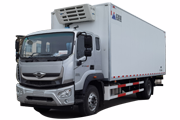
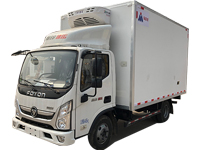
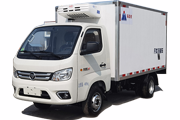
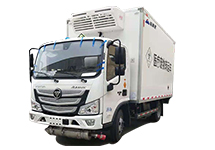
With the increase of the market share of refrigerated vehicles, people are increasingly eager for the professional knowledge of refrigerated vehicles, equipped with insulated carriages, refrigeration devices and box type special transport vehicles for refrigerated transportation. Now let's learn about the classification and composition of refrigerated vehicles in detail!
1、 Refrigerator truck classification
In fact, refrigerated trucks are called refrigerated heat preservation trucks, which are classified into refrigerated trucks and heat preservation trucks. Thermal insulation vehicle refers to the vehicle with thermal insulation compartment, which is suitable for short distance thermal insulation transportation. Refrigerator car refers to the car with insulated compartment and refrigeration device. According to the refrigeration method of refrigeration device, there are mechanical refrigerated car, refrigerated plate refrigerated car, liquid nitrogen refrigerated car, cold refrigerated car, etc. Among them, mechanical refrigerated vehicles are the main models of refrigerated vehicles, and most domestic refrigerated vehicles are also mechanical refrigerated vehicles, which can be divided into mini refrigerated vehicles, small refrigerated vehicles, medium refrigerated vehicles and large refrigerated vehicles according to the chassis bearing capacity. According to the type of car, it is classified as: disc refrigerated car, box type freight car and semi-trailer refrigerated car.
2、 Composition of refrigerated truck
The refrigerated vehicle is mainly composed of vehicle, heat insulation and thermal insulation compartment, refrigeration unit, interior temperature recorder and other components. For vehicles with special requirements, such as meat hook vehicle, optional components such as meat hook, waist stop, aluminum alloy guide rail and ventilation slot can be added. Refrigerated vehicles: The common refrigerated vehicles in China mainly include Jiefang, Dongfeng, Qingling, Jianghuai, Jianghuai, Futian, etc. Refrigeration chamber body: generally composed of polyurethane material, glass fiber reinforced plastic, color steel plate, stainless steel, etc. Manufacturing technologies include: "sandwich" board bonding (commonly used), injection foaming, integrated framework injection foaming, vacuum adsorption bonding, etc. Refrigeration unit of refrigerator car: the refrigeration unit is divided into non independent refrigeration unit and independent refrigeration unit. Domestic units and imported units, etc. External air conditioners are used for general vehicle models, and built-in air conditioners are used for a few micro air-conditioned vehicles. If it is a refrigerated car with low temperature requirements, a cold plate (equivalent to the function of evaporator) can be built in the lift car.
3、 Refrigeration principle of refrigerator car
There are many refrigeration methods for air-conditioned vehicles, and the following five are general refrigeration methods:
1. Water ice and salt ice freezing: The water ice freezing device has low investment and operation cost, but the heat absorption per unit mass of ordinary water (salt) ice is small, and the temperature drop in the compartment is limited. In addition, when salt ice is dissolved, it will pollute the environment and food, corrode the carriages and valuable goods, and make them wet. Therefore, salt) ice freezing mainly refers to the refrigerated transportation of fish and other aquatic products.
2. Dry ice refrigeration: simple device, low investment and operation costs, easy to use, and goods are not wet. The carbon dioxide gas produced by dry ice sublimation inhibits microbial reproduction, alleviates fat oxidation, and weakens the respiration of fruits and vegetables. However, dry ice sublimation is easy to frost, and excessive carbon dioxide gas will lead to the difficulty in breathing and necrosis of fruits, vegetables and other refrigerated objects. In addition, due to the difficulty in adjusting the indoor temperature, the high cost and large consumption of dry ice, there are few practical applications.
3. Cold plate refrigeration: the device itself is very heavy and bulky, accounting for a certain volume of the car. Moreover, the cold plate can only work for 8-15H at a time. Therefore, refrigeration refrigerators are suitable for medium and short distance transportation of medium and light refrigerated vehicles. In recent years, with the increasingly prominent problems of energy and environmental pollution, the application of refrigeration refrigerators has developed rapidly and become the second only to mechanical refrigeration.